
How Foil Stamping Works on Candle Packaging?
Candles today do more than light up the room. They spice up the ambiance and create an unforgettable sensory experience. However, before customers smell the scents, they see your box. Premium candle packaging helps you impress every eye within seconds. And the secret lies in finishing.
Foil stamping is a luxury finish that can make your box look stunning at first glance. What is foil stamping, and how does it work on candle packaging? Let’s discuss it in detail.
What is Foil Stamping?
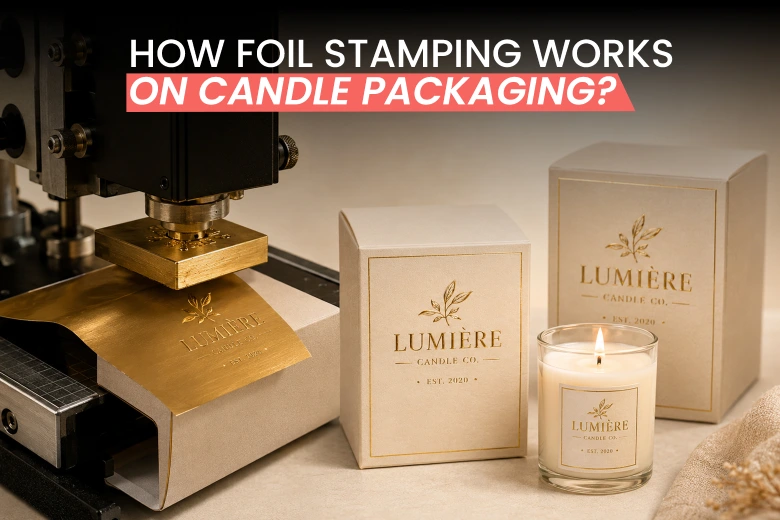
Foil stamping is a specialized, ink-free printing technique. It uses heat, intense pressure, and metal dies to bond a thin film to a surface.
Unlike normal printing, this technique leaves a brilliant, raised, or slightly recessed metallic finish. It brings flat logos, text, and intricate patterns to life.
In short, foil stamping is the best finish you can rely on for custom candle boxes that convey high-end quality.
Two Types of Foil Stamping
There are two main types of foil stamping used in the packaging industry.
- Hot Foil Stamping
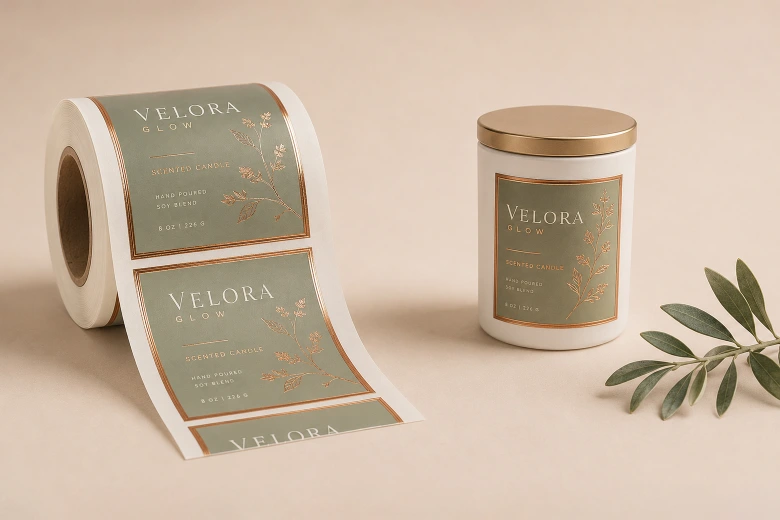
It uses a heated metal die to press the metallic foil into the candle label surface. This method creates a striking, slightly debossed finish that is highly tactile.
- Cold Foil Stamping
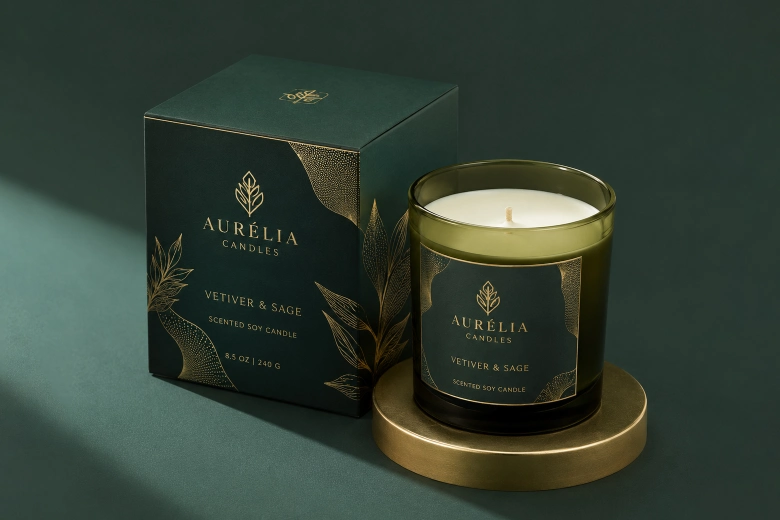
It applies the foil using printing plates and UV-cured adhesive. This is ideal for high-volume orders or temperature-sensitive candle box materials.
The Process of Foil Stamping
The foil stamping process combines traditional engineering with artistic precision. It requires specialized machinery to ensure a flawless finish. Every step must be executed perfectly to prevent imperfections.
Let’s take a look at the complete foil stamping process.
- Die Creation
The process starts with your digital artwork. This design is engraved on a metal plate, called a die, made of copper, brass, or magnesium. This die acts as a master stamp for your design.
- Heating
Once mounted on the press, the machine heats the metal die. The exact temperatures will be set based on your packaging material. The correct heat is essential because it activates the foil’s built-in adhesive layer.
A roll of specialty foil feeds into the press. It sits directly between the heated metal die and your packaging box.
- Foil Application
The foil film contains multiple layers, including a color layer and a heat-sensitive glue layer.
- Stamping
The machine brings the heated die down with immense force. It presses the foil directly into the material substrate. The heat and pressure cleanly fuse the design shape to the box.
- Peeling
The machine lifts the die away from the packaging. The excess, unused foil film is wound onto a recycling roll. Only the perfectly stamped design remains bonded to your candle box.
Common Types of Foil Used in Candle Packaging
Different foils trigger different emotions in customer perception. And choosing the right foil type defines the personality of your candle product line.
Here are the common types of foil used in candle packaging.
Metalized Foil
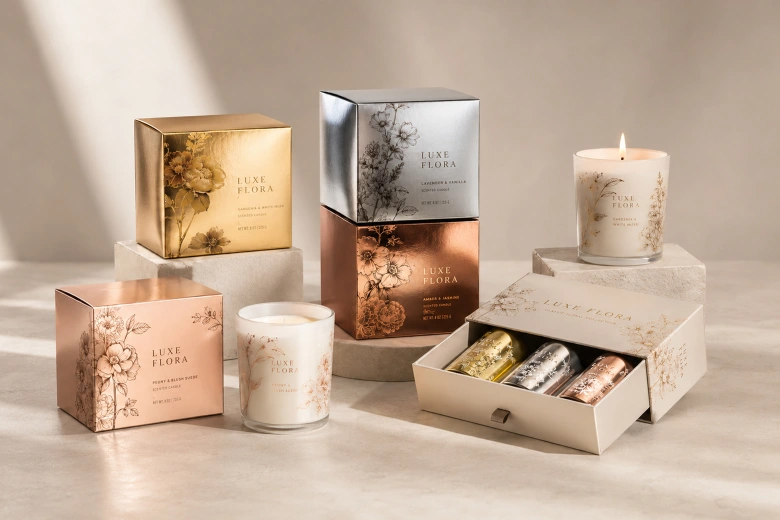
Metalized foil delivers a highly reflective, mirror-like, metallic shine in gold, silver, copper, and rose gold. It catches light beautifully, instantly presenting a sense of luxury and catching the shopper’s eye on the shelf.
Best for: Classic floral scented candles and high-end candle sets.
Pearl Foil
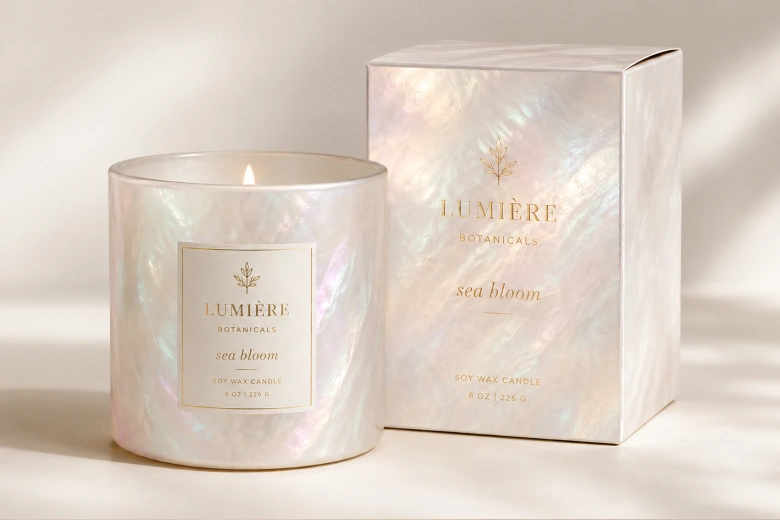
This one features a soft, translucent, pearlescent luster that mimics the inside of a seashell. Pearl foil offers an elegant sheen rather than a bright, punchy metallic look. It also adds depth and a sense of softness.
Best for: Spa lines, aromatherapy candles, and delicate floral or organic scents.
Pigment Foil
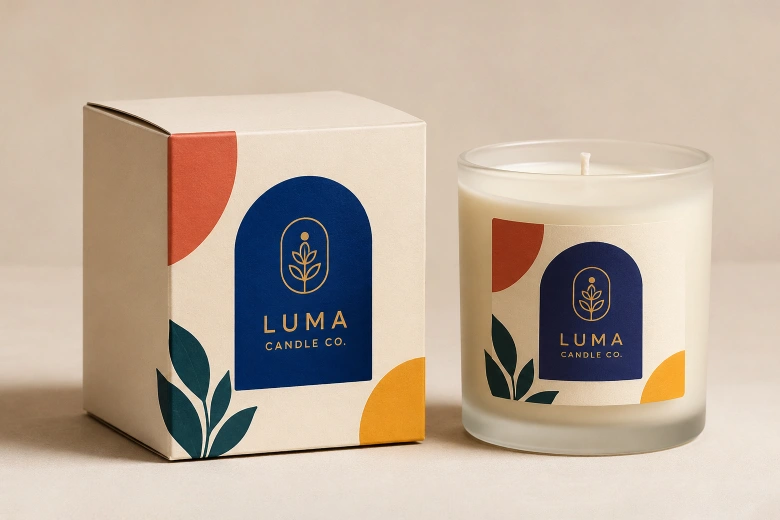
Comes in a wide variety of colors, pigment foil offers no metallic shine. It provides crisp, high-contrast, and clean graphics. This foil works perfectly as a base to make your logo pop without flashiness.
Best for: Minimalist brands, bold modern collections, and vibrantly colored candles.
Holographic Foil
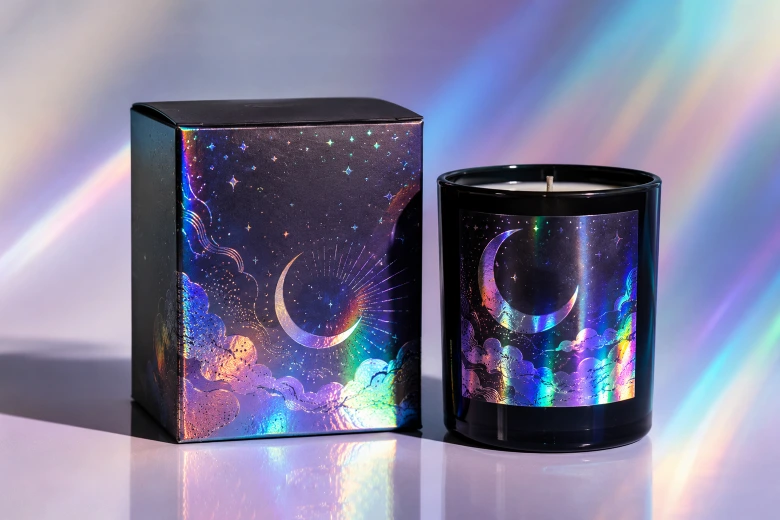
This foil transfers dynamic 3D illusions and rainbow-colored, light-reflective patterns. Holographic foil is extremely eye-catching and futuristic; it creates visual movement when the packaging shifts in the light.
Best for: Seasonal releases, holiday collections, and youthful or mystical-themed candles.
Matte Foil
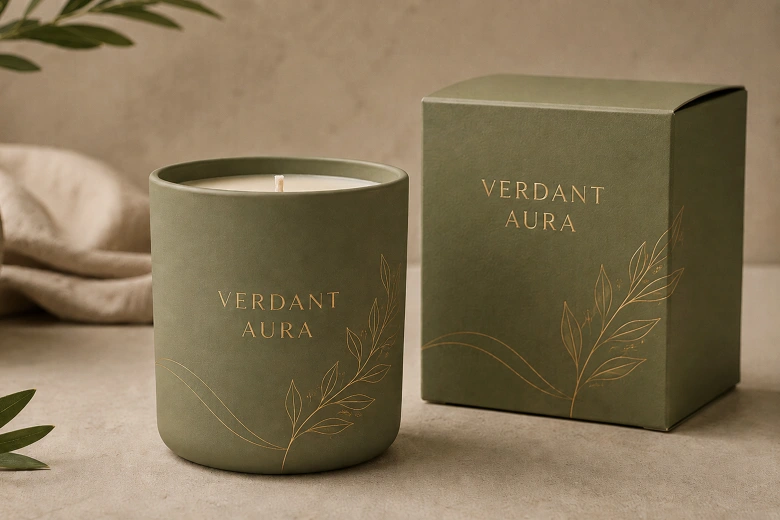
As the name suggests, matte foil creates a soft, non-reflective, completely flat color. It offers a smooth, tactile, and velvety appearance. Most importantly, this technique resists fingerprints, feels luxurious, and pairs brilliantly with tactile effects like embossing or debossing.
Best for: Organic, eco-friendly, and all-natural candles.
Gloss Foil
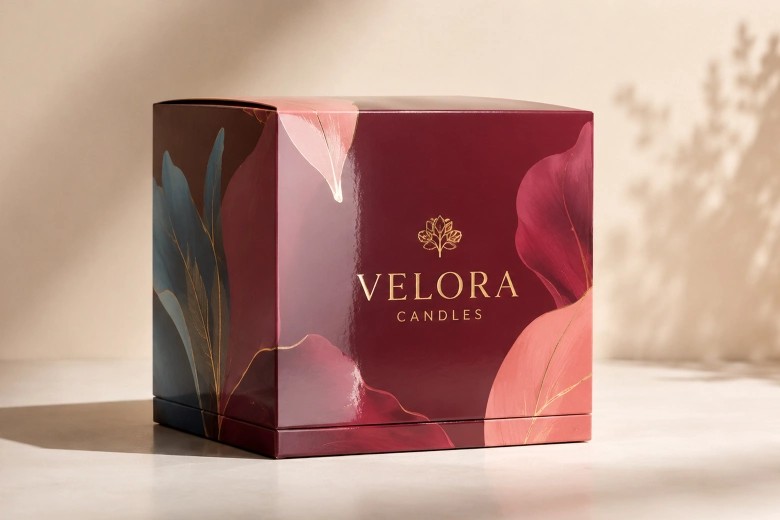
Gloss foil delivers high-gloss, shiny color with a non-metallic, lacquered look. It creates deep, saturated color with a high-shine surface.
Best for: Bold, contemporary, and fruity or sweet-scented candle lines.
Patterned Foil
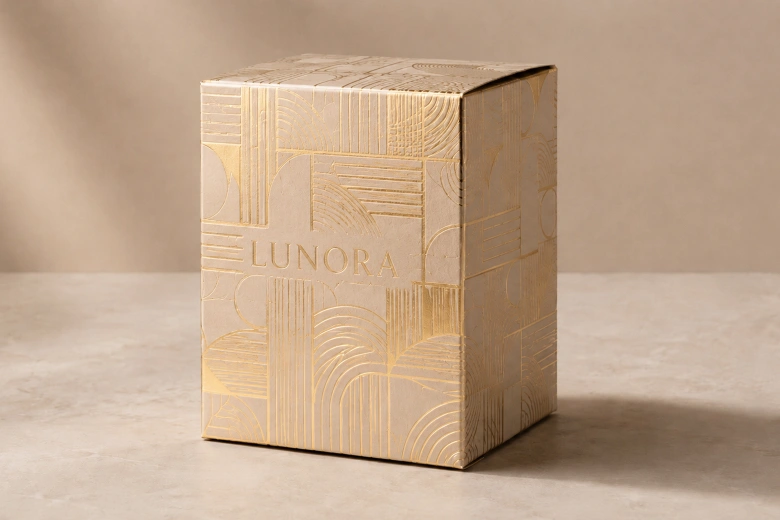
Patterned foil is reprinted with patterns, geometric shapes, or abstract designs transferred directly onto the box. This technique creates artistic flair without needing a completely custom die for intricate details.
Best for: Artistic or designer candle collections and limited-edition lines.
Specialty Effect Foil
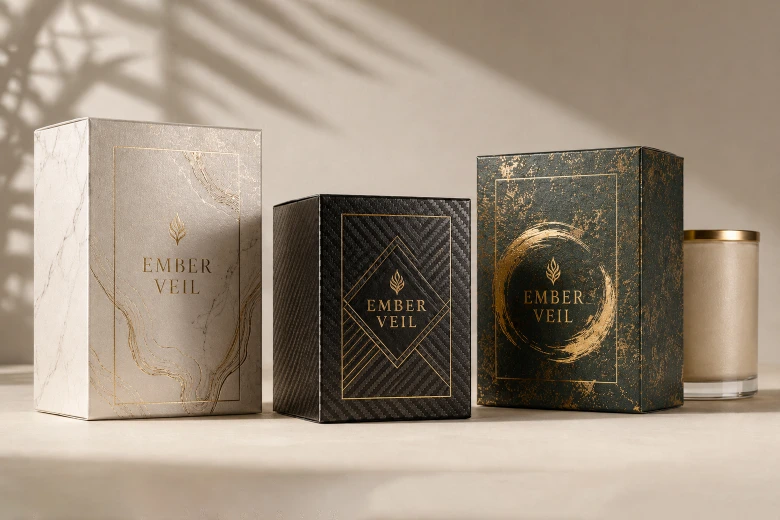
A wide foil variation that includes textured effects like marble, carbon fiber, or distressed finishes. Specialty-effect foil adds a multisensory component to your candle packaging design.
Best for: Niche or artisanal candles, allowing your packaging to represent the aesthetic of the wax or vessel visually.
Types of Foil Used for Candle Packaging
| Foil Type | Appearance | Best for |
| Metallized Foil | Highly reflective, mirror-like, metallic shine | Classic floral scented candles, high-end candle sets |
| Pearl Foil | Soft, translucent, pearlescent luster | Spa lines, aromatherapy candles, delicate floral or organic scents |
| Pigment Foil | Crisp, high-contrast, clean graphics, no metallic shine | Minimalist brands, bold modern collections, and vibrantly colored candles |
| Holographic Foil | 3D illusions, rainbow-colored, light-reflective patterns | Seasonal releases, holiday collections, mystical-themed candles |
| Matte Foil | Soft, non-reflective, velvety | Organic, eco-friendly, all-natural candles |
| Gloss Foil | High-gloss, shiny color, non-metallic look | Bold, contemporary, and fruity or sweet-scented candles |
| Patterned Foil | Reprinted with patterns, geometric shapes, or abstract designs | Artistic or designer candle collections, limited-edition lines |
| Specialty Effect Foil | Textured effects like marble, carbon fiber, or distressed finishes | Niche or artisanal candles |
The Amazing Benefits of Foil Stamping for Candle Boxes
Investing in foil stamped candle boxes offers significant long-term benefits for your brand presence. It transforms your packaging from an afterthought into a primary selling point.
Here are the amazing benefits of using foil stamping for your candle boxes.
Delivers Tactile Engagement
Candle buyers naturally love to touch the beautiful surfaces. The physical indentation invites them to pick up your candle box. And this tactile engagement directly drives higher sales volumes.
Offers Enhanced Brand Perception
Shiny, crisp details communicate that your candle is premium. It instantly separates your brand from cheap, mass-market alternatives. Choosing foil stamping helps you build deep trust before the box is ever opened.
Provides Durability & Protection
Foil designs do not bleed, smudge, or fade over time like liquid inks. They handle friction, rough shipping, and shelf wear incredibly well. Whether you need candle shipping boxes for e-commerce or luxury candle boxes for boutique displays, they stay perfect from the factory floor to customers’ living rooms.
It is Flexible
The foil stamping process works seamlessly on almost any box size, color, or shape. It accommodates tiny text font details and bold patterns.
Justifies Higher Price Points
A luxury presentation allows you to price your candles much higher. We know that customers are willing to pay a premium price for gorgeous, gift-ready packaging. Thus, adding foil stamping to your packaging can significantly increase profit margins.
Foil Stamping on Candle Packaging: Things to Consider
While foil stamping is highly effective, successful execution requires technical planning. What are the factors to consider when applying foil stamping to your candle packaging?
Hot Foil vs Cold Foil
Hot foil stamping uses heat and custom metal dies for deep, tactile luxury. Cold foil is applied flat via a printing-press adhesive and is faster. For true premium candle boxes, hot foil provides superior depth and reflection.
Paper and Substrate Choices
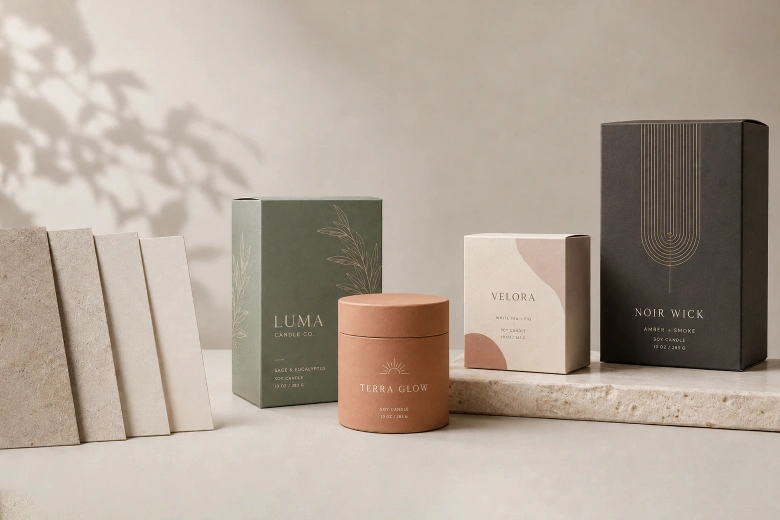
The texture of your candle box material dictates your final results. Ultra-textured rigid chipboard or recycled papers can cause foil “drop-out” or gaps. Meanwhile, smooth, coated, or laminated paperboard or cardboard ensures flawless, sharp-edge adhesion.
Design and Die Details
Avoid incredibly thin lines or micro-fonts in your packaging design. High pressure can cause excess foil to bleed and blur tiny gaps. Keep design lines bold and spaced out for optimal clarity.
Production Run Sizes
Custom metal dies require an upfront financial investment to manufacture. This makes hot stamping ideal and affordable for medium-to-large production runs. For small test batches, you can opt for die-less digital foil-stamping options.
Finishing Up
Undoubtedly, foil stamping is one of the luxury finishes that can make your box look stunning at first glance. It is the best finish you can rely on for custom candle boxes that convey high-end quality. Whatever foil type you choose, this technique delivers tactile engagement, offers enhanced brand perception, provides durability & protection, is flexible, and justifies higher price points.
FAQs
What is foil stamping?
Foil stamping is a specialized, ink-free printing technique. It uses heat, intense pressure, and metal dies to bond a thin film to a surface. This technique delivers a brilliant, raised, or slightly recessed metallic finish. It brings flat logos, text, and intricate patterns to life.
What are the common types of foil used in candle packaging?
Common types of foil used in candle packaging include metalized, pearl, pigment, holographic, matte, gloss, patterned, and specialty effect foils.
What are the benefits of using foil stamping?
Foil stamping delivers tactile engagement, offers enhanced brand perception, provides durability & protection, is flexible, and justifies higher price points.
What to consider when applying foil stamping to candle packaging boxes?
Consider hot foil vs cold foil, paper & substrate choices, design & die details, and production run sizes.


Get Free Quote
Latest Posts
-
 July 16, 2026
How to Create a Luxury Candle Brand on a Budget -
 July 15, 2026
Candle Packaging for Etsy Sellers: What You Need to Know -
 July 14, 2026
Candle Packaging Regulations in the United States -
 July 13, 2026
Candle Packaging Trends 2026 Every Brand Should Watch -
 July 10, 2026
Candle Brand Packaging Mistakes and How to Avoid Them