
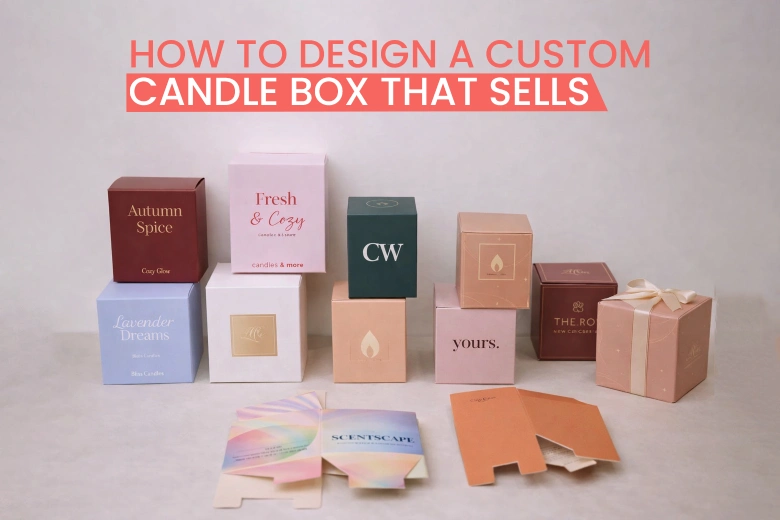
How to Design a Custom Candle Box That Sells? A Step-by-Step Guide And Expert Tips
- How to Design a Custom Candle Box That Sells? A Step-by-Step Guide And Expert Tips
- Step-by-Step: How to Design a Custom Candle Box?
- Candle Box Design Tips That Actually Increase Sales
- Why Packaging Still Matters (After You Know the “How”)
- Designing for Retail vs E-commerce
- Common Mistakes to Avoid
- Balancing Cost and Quality
- Future Trends in Candle Packaging
- Final Thoughts
These days, designing a custom candle box is not just about making it look good. Well, now it is about creating packaging that protects your product, captures buyers’ attention, and reflects your brand identity.
To say it simply, designing a candle box has steps like choosing the right size, material, structure, visuals, and finishing options to make your product stand out and sell.
If you are here while looking for such practical, actionable guidance, this guide walks you through the exact process and explains what works. If you want a broader understanding before diving in, you can also explore our candle packaging guide.
Step-by-Step: How to Design a Custom Candle Box?
Let us go straight into the process.
Step 1: Decide the Size and Dimensions
First of all, you have to find the dimensions of your candle accurately. This is because the box you design should fit snugly, not too tight nor too loose.
A box that is well-fitted keeps your candle safe from movement during shipping and reduces the risk of damage. If your candle comes in a jar or container, include the lid in your measurements.
If your product is premium, you can also consider adding space for inserts or padding to boost protection and presentation.
Step 2: Choose the Right Material
Material plays a big role in both strength and brand perception. If you are just starting out or working with a limited budget, standard cardboard works well as it is light in weight, affordable, and easy to print on.
Kraft paper gives a more natural look and appeals to customers who value sustainability.
If your brand’s target audience is high-profile people, rigid packaging is your savior. It feels sturdy, luxurious, and instantly upgrades perceived value.
The key is to match your material choice with how you want your brand to be perceived. If you choose cheap materials for premium candles, it will badly hurt the image of your brand. If you want a deeper breakdown of materials, durability, and eco options, check our candle packaging material guide.
Step 3: Select the Best Box Style
After the material, it’s now time to decide how your box will open and function. Here are a few popular choices that different brands consider for their candles.
- A tuck-end box is simple and widely used for retail products. It is cost-effective and easy to assemble.
- If you want a more luxurious feel, rigid boxes or two-piece cande boxes (lid and base) offer an unboxing experience that gives customers a premium vibe.
- Drawer-style (slide-out) boxes are unique and memorable.
- Window boxes allow customers to see the candle inside. It helps you in building trust, especially when you sell in retail environments.
Your box style should match both your budget and the experience you want to create.
Step 4: Design the Visual Elements
Now, this is where your packaging starts to sell. You need to focus on three main elements: color, typography, and layout.
Color sets the mood. Soft tones can feel calming and relaxing, while darker shades often suggest luxury. Earthy colors work well for natural or organic candles.
Typography should match your brand personality. If your brand’s personality is modern, go for clean fonts; if you want to add sophistication, choose elegant fonts. Keep fonts as simple as possible because too many fonts can make your design look unprofessional.
Your layout should be clean and balanced. Avoid overcrowding. A minimal design looks more premium and is easier for customers to understand on first contact.
If you are not sure what style to go with, explore different candle packaging ideas to see what designs are trending and effective.
Step 5: Add Branding and Product Details
Your candle box should clearly communicate what the product is and who it is from.
At a minimum, you can do is to include your logo and brand name in a visible position. The scent of the candle should also be easy to find, as this is a major buying factor.
You can also include useful details like burn time, ingredients, and safety instructions. These not only inform the customer but also build trust and credibility.
Clarity is essential. If your customers can not quickly understand your product, they are less likely to buy it.
Step 6: Choose Finishing Options
Finishing touches have the power to take your packaging from basic to premium.
A matte finish gives a soft, elegant look, while gloss makes colors more vibrant. Foil stamping adds a metallic shine that instantly grabs attention, especially for logos or brand names.
Embossing or debossing creates texture. This makes your design feel more interactive and high-end. Spot UV can highlight specific areas and add contrast.
You do not need to use every option; just choose one or two that align with your brand style.
Step 7: Test Your Packaging
It is very important to test your design in real conditions before finalizing it.
Check if the box protects your candle during shipping. See how it looks under different lighting. Ask for feedback from potential customers or friends.
Testing helps you catch issues early and makes sure your final packaging performs well in the market.
Candle Box Design Tips That Actually Increase Sales
Once you understand the process, the next step is refining your design for better results.
The most effective packaging is one that is simple. It means to show clean layouts with clear messaging that gives a richer and more classy impression than overly complex designs. To get noticed among others, your box should stand out on shelves, so consider how it compares visually to your competitors.
Quality matters more than quantity. Instead of adding too many design elements, focus on high-quality printing and materials. A well-executed simple design often outperforms a complicated one.
It is also important to highlight what makes your candle unique. Whether it is handmade, eco-friendly, or long-lasting, your packaging should tell this clearly.
Finally, always design while keeping your audience in mind. What appeals to a luxury buyer may not work for a budget-conscious shopper.
Why Packaging Still Matters (After You Know the “How”)
Now that you understand how to design a candle box, it is easier to see why packaging plays such a powerful role.
Your box is often the first point of contact your customer has with your product. It shapes their expectations and affects whether they pick up your candle or ignore it.
For gift buyers, packaging becomes even more important. A well-designed box can skip the need for extra wrapping and increase perceived value.
Packaging also contributes to the overall experience. From the moment someone opens the box, it creates an impression that can lead to repeat purchases.
Designing for Retail vs E-commerce
Your sales channel affects your packaging priorities. You can not design the same packaging for both retail and online, as the needs are different.
In retail settings, the demand for your box is to grab attention quickly. Customers are comparing multiple products side by side, so visual appeal becomes a key factor here.
For e-commerce, the focus shifts slightly towards protection. It becomes more important since the product has to survive shipping. At the same time, the unboxing experience becomes a key part of customer satisfaction.
The best approach is to balance both strong visuals for attraction and solid structure for protection.
Common Mistakes to Avoid
How sad it feels if your customer gives bad remarks to your excellent product just because of poor packaging? It is mostly seen that many good products struggle due to poor packaging decisions.
One common mistake is overdesigning. Too many colors, fonts, or graphics can make your packaging look cluttered and confusing. Another issue is inconsistent branding, where the packaging does not match your overall brand identity.
Also, using low-quality materials can damage the image of your brand, especially if you are targeting a premium market.
Balancing Cost and Quality
It is important to create packaging that looks great without overspending. You do not need the most expensive materials or finishes to create a strong impression. Instead, focus on elements that deliver the most impact, such as clean design, good material quality, and clear branding.
If you are tight on budget order in bulk, use standard sizes, and limit excessive finishes. This will help you in controlling costs while still maintaining a professional look.
Future Trends in Candle Packaging
The candle market continues to grow, and packaging trends are shifting with it. Minimalist designs are becoming more popular because they feel clean and modern. Sustainability is also a major focus, with more brands using recyclable and biodegradable materials.
Personalized packaging is gaining attention as well. Custom messages or limited-edition designs can create a stronger emotional connection with customers.
Staying aware of these trends can help your brand remain competitive.
Final Thoughts
Designing a custom candle box that sells is all about combining function, aesthetics, and strategy.
By following a clear process and applying proven candle box design tips, you can create packaging that not only protects your candles but also attracts attention, builds trust, and drives sales.
Remember, your candle box is not just packaging; it is part of the product experience. When designed thoughtfully, it becomes a powerful tool that helps your brand stand out in a crowded market.

Get Free Quote
Latest Posts
-
 October 15, 2026
Halloween Packaging Ideas for Candles: Spooky Style Meets Smart Branding -
 September 11, 2026
How Much Do Custom Candle Boxes Cost in 2027? -
 September 8, 2026
Cardboard Candle Boxes vs Kraft Candle Boxes: Complete Comparison -
 September 3, 2026
Rigid Candle Boxes vs Folding Cartons: Which Packaging Should You Choose? -
 September 1, 2026
Custom Candle Boxes vs Stock Candle Boxes: Which Is Better?