
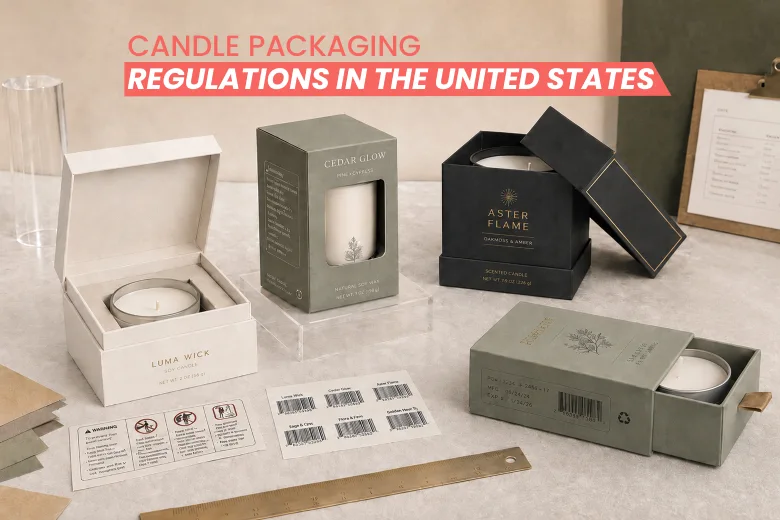
Candle Packaging Regulations in the United States
Starting a candle business is an exciting journey. However, pouring beautiful wax and picking the perfect scents is only half the battle. To sell your products legally and safely, you must understand candle packaging regulations in the United States.
Failing to comply can lead to heavy fines, forced recalls, or devastating lawsuits. In short, you must comply with federal laws, safety standards, and labeling requirements.
Let’s explore all the regulations to ensure your candle brand is both successful and legally compliant.
Key Candle Packaging Requirements
Navigating federal regulations might feel overwhelming at first. However, the rules exist to protect your customers and your business.
Candle packaging compliance in the U.S. relies on two main frameworks: commercial transparency and fire safety. The FTC (Federal Trade Commission) and the Consumer Product Safety Commission (CPSC) govern these areas.
Let’s break it down.
Legal Labeling Requirements (FPLA)
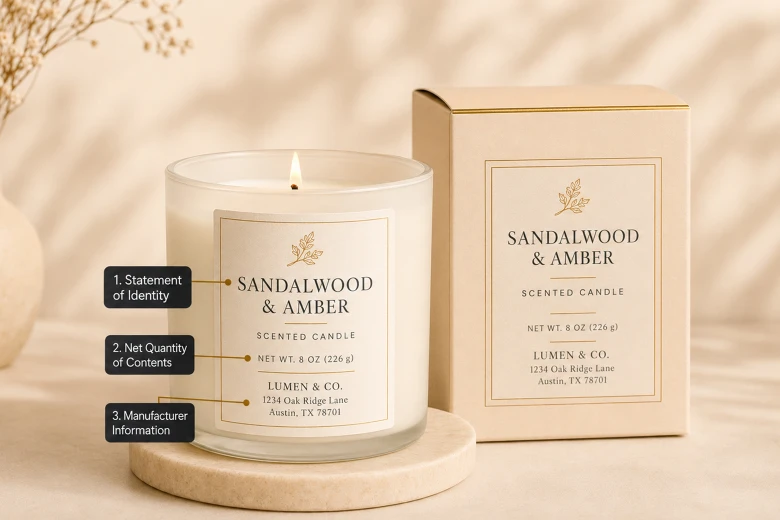
The Fair Packaging and Labeling Act (FPLA) is a federal law managed by the FTC (Federal Trade Commission). It requires all consumer commodities to feature specific, honest information.
Your candle packaging or main label must display three core elements.
- Statement of Identity
The front label must clearly state what the product is (e.g., “Scented Candle” or “Soy Wax Melt”).
- Net Quantity of Contents
The weight of your wax and fragrance combined must be listed together. Do not include the container weight. This net weight must appear within the bottom 30% of the principal display panel (PDP).
- Manufacturer Information
The name and place of business of the manufacturer, packer, or distributor. This includes street address, city, state, and ZIP code.
Fire & Consumer Safety (CPSC & ASTM)
The Consumer Product Safety Commission (CPSC) heavily monitors candle safety under the Federal Hazardous Substances Act (FHSA).
While the CPSC enforces the law, it relies heavily on voluntary standards developed by ASTM International (American Society for Testing and Materials).
ASTM F2058 is the gold standard for candle warning labels. It mandates that every candle features a visible fire safety warning. This warning must include the official safety alert symbol (an exclamation point inside a triangle).
Also, the word “WARNING” must be included with the three mandatory burn rules:
- Burn within sight.
- Keep away from things that catch fire.
- Keep away from children and pets.
In addition, federal law strictly bans the manufacturing or sale of candles with lead-cored wicks.
Container & Material Safety
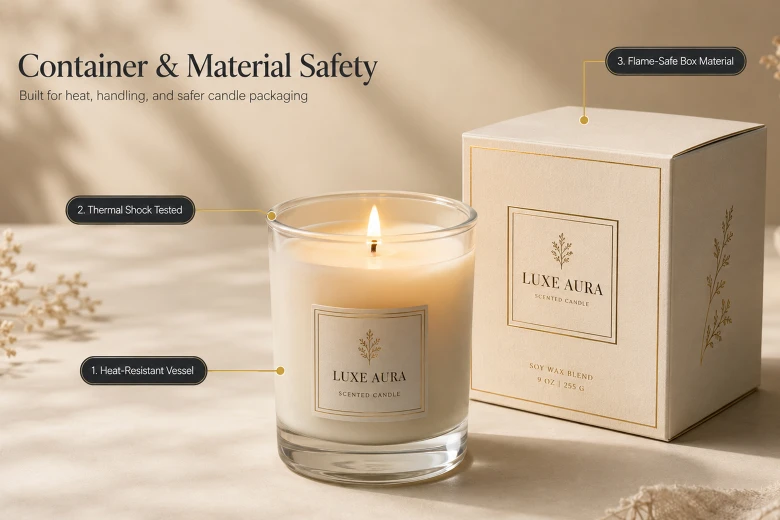
Your choice of candle vessel directly impacts consumer safety. Under ASTM International standards, candle containers must undergo thermal shock testing. The reason? To ensure they withstand high temperatures without cracking, breaking, or igniting a fire.
Furthermore, whether it is a luxury candle box or a candle shipping box, your candle box materials must not ignite easily if they come into contact with a stray flame.
Fair Packaging and Labeling Act (FPLA)
If you sell candles in pre-packaged kits, FPLA rules still apply. The outer box must clearly state exactly what is inside (e.g., “Contains: 1 Ceramic Burner, 4 Wax Melts”). The total net weight of all consumable items in the kit must be clearly printed on the front panel.
The National Candle Association Regulations
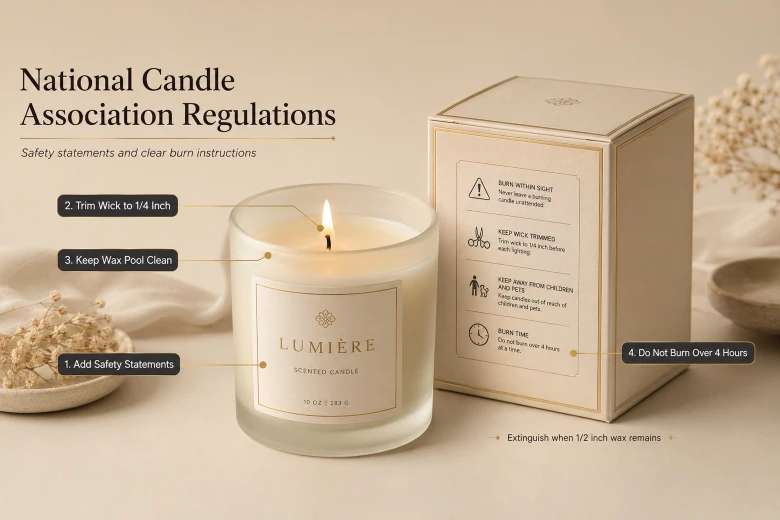
The National Candle Association (NCA) is the leading organization for candle makers in the United States. While the NCA does not write federal laws, they heavily drive the safety standards adopted by the CPSC and ASTM.
Adding Safety Statements
The NCA strongly advises adding safety statements to your products. These statements go beyond basic warnings. They educate customers on the mechanics of a clean, safe burn. Most importantly, these statements protect your brand from misuse-related liability.
Including Instructions
Clear burn instructions help prevent common household hazards.
The NCA recommends including text on your candle packaging that informs users to:
- Trim the wick to 1/4 inch before every single burn.
- Keep the wax pool completely free of wick trimmings and debris.
- Avoid burning the candle for more than 4 hours at a time.
Adding Additional Safety Information
For maximum liability protection, consider adding additional safety details.
For example:
- Remind customers to extinguish the candle when only 1/2 inch of wax remains.
- Advise them to avoid drafty areas, such as open windows or ceiling fans.
Candle Accessories Standard Specification for Fire Safety
Candle safety extends far beyond the wax and the jar. If you sell some candle accessories, you must comply with specific standards. ASTM F2417 and ASTM F2601 govern these products to minimize fire risks.
- Candle Accessories
Candle accessories include any item designed to hold, surround, or change how a candle burns (e.g., plates, trays, and snuffers). To ensure fire safety, all accessories must be made of non-combustible materials. Also, they must pass strict heat-resistance and stability tests.
- Candle Burners
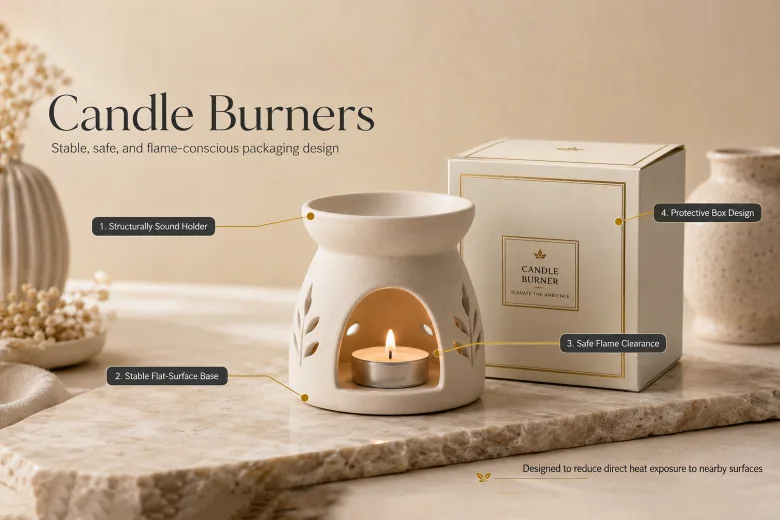
Candle dust holders, burners, and tea light warmers must be structurally sound. They must remain stable on a flat surface and tip over only under extreme angles. Most importantly, your candle box design must prevent the candle flame from directly heating nearby flammable surfaces.
- Potpourri
Potpourri and wax melt warmers face unique regulations. The flame or electric heating element must heat the wax or dry botanicals evenly. The design of your wax melt boxes must ensure that the temperature never reaches a flash point, which could cause a sudden flash fire.
- Flammability of Candle Rings
Candle rings are decorative wreaths placed around the base of a candle. Because they are often made of faux plants, fabric, or plastic, they pose a severe fire hazard. Under ASTM regulations, candle rings must pass strict flammability tests to prove they will not ignite if exposed to a direct flame.
Candle Packaging Regulations: The US vs International
The United States relies heavily on voluntary industry standards for safety. Meanwhile, international markets like the European Union enforce mandatory product directives.
| Regulatory Aspect | United States | International (EU/UK Focus) |
| Governing Bodies | Federal Trade Commission (FTC) & Consumer Product Safety Commission (CPSC) | General Product Safety Regulation (GPSR), European Chemicals Agency (ECHA) |
| Safety Warning Labels | The CPSC requires labels if hazardous substances are present | Safety information and specific pictograms are strictly mandatory by law |
| Material & Wicks | Lead Wicks: Legally banned by the CPSC | Restrictions on heavy metals and general chemical compositions |
| Net Weight & Content | Must display net weight in both imperial (oz) and metric (g) on the principal display panel | Requires weight in metric grams (g), sizing must be prominent |
| Manufacturer Info | Must display legal business name and exact location (city, state, zip) | Requires a “Responsible Person” within the EU/UK |
| Fragrance & Allergens | No sweeping disclosure laws beyond standard ingredient naming | Expanding lists of specific fragrance allergens must be declared |
Why Candle Packaging Regulations Matter?
Compliance might seem like an expensive hurdle, right? However, it serves as the foundation of a successful candle business. Following these rules protects your customers, your finances, and your brand reputation.
Here’s why candle packaging regulations matter.
Consumer Safety and Hazard Prevention
Candles are open flames inside a home. Proper packaging and safety candle box labeling prevent injuries, property damage, and loss of life.
Legal Compliance and Liability
If a customer suffers property damage from an unlabeled candle, you face extreme financial liability.
Compliance shields your business. It proves you provided standard federal warnings. As a result, it will drastically lower your risk of costly lawsuits or government fines.
Allergen and Ingredient Transparency
Modern customers care deeply about what they breathe. While the US does not currently require it, disclosing wax types (like soy or coconut) and potential fragrance allergens builds immediate consumer trust.
Brand Trust and Market Reputation
Professional, fully compliant packaging signals to customers that you run a legitimate business. It shows you care about quality and safety. This trust converts casual buyers into lifelong, loyal brand advocates.
The Takeaway
In summary, candle packaging compliance is not just about avoiding fines. It is a commitment to your customers’ safety and your brand’s longevity. By mastering FPLA guidelines, CPSC rules, and ASTM safety standards, you protect your business from liability while building deep consumer trust. Review your candle labels today, audit your containers, and build a safe, compliant, and highly profitable candle empire.
FAQs
What regulations should candle packaging comply with in the US?
Candle packaging regulations in the US include FTC (Federal Trade Commission) and the Consumer Product Safety Commission (CPSC).
What should be included on the front panel of candle labels?
The details that should be included on the front panel of candle labels are a statement of identity, net quantity of contents, and manufacturer information.
What to include on candle warning labels?
Candle warning labels must include the official safety alert symbol (an exclamation point inside a triangle.
Why candle packaging regulations matter?
Candle packaging regulations matter for consumer safety & hazard prevention, legal compliance & liability, allergen & ingredient transparency, and brand trust & market reputation.




Get Free Quote
Latest Posts
-
 July 16, 2026
How to Create a Luxury Candle Brand on a Budget -
 July 15, 2026
Candle Packaging for Etsy Sellers: What You Need to Know -
 July 13, 2026
Candle Packaging Trends 2026 Every Brand Should Watch -
 July 10, 2026
Candle Brand Packaging Mistakes and How to Avoid Them -
 July 9, 2026
How Packaging Affects Candle Brand Sales?