
The Ultimate Candle Packaging Guide: Pack, Protect, and Sell
- The Ultimate Candle Packaging Guide: Pack, Protect, and Sell
- What Makes Good Custom Candle Packaging?
- The Best Materials for Candle Boxes
- Popular Candle Box Style Options
- Different Candle Types and Their Packaging Needs
- Why Custom Candle Packaging is Important for Your Business?
- Getting the Right Candle Boxes
- In Summary
- FAQs
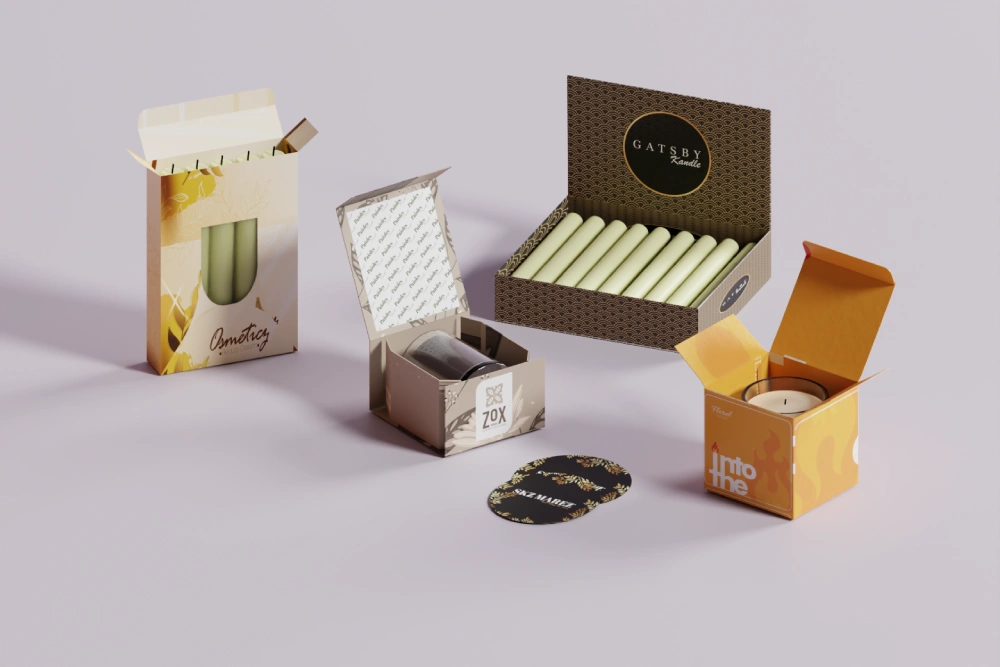
Making great candles requires combining art and passion. But selling them requires excellent packaging. The right candle box protects your delicate product. Most importantly, it tells your brand story and boosts sales without any hassle.
This ultimate guide explains what makes candle packaging that packs, protects, and sells—from the materials and styles to why every essential matters.
What Makes Good Custom Candle Packaging?
Custom packaging does more than a simple box. It is a smart tool to grow your business. And speaking of custom candle packaging, it must do many jobs at once. It should protect your candle, show off your branding, and deliver a memorable unboxing experience.
Let’s explore the factors that make good candle packaging.
It Offers Superior Protection and Durability
Candles are fragile. Those glass jars can crack, wax can melt or scratch, resulting in product damage and customer disappointment. Good packaging acts as a durable shield. It offers superior protection to keep your candle safe during shipping and handling.
You should also consider the paper’s thickness, measured in points (pt). A box that is 16pt or 18pt thick is best for heavy glass jars. For light wax candles, 14pt paperboard works well.
It Provides a Clear Brand Identity
Your box is the face of your candle brand. It should have your logo, signature colors, and font. When customers see your candle box, they should know it’s yours. You should also think about the type of candle you are selling. If you sell lavender candles, use soft, pastel colors. If you sell a high-energy citrus scent, use bright, vibrant graphics.
It Supports Functionality and Sustainability
Candle boxes must be easy to open and close. They should also be good for the Earth, since many buyers now look for eco-friendly candles. Thus, using FSC-certified, green material can help you win customers.
It Delivers a Memorable Unboxing Experience
Unboxing should be a special moment for customers. And a beautiful box makes this moment exciting. It creates a strong emotional link between your brand and the buyer. Use custom printed paper or add a logo sticker. Drop in a handwritten thank-you note or a discount voucher for their next order.
The Best Materials for Candle Boxes
The material you choose affects how your box looks and feels. Most importantly, it decides how strong the box will be.
Here are the best materials for candle boxes.
Solid Bleached Sulfate (SBS) Paperboard
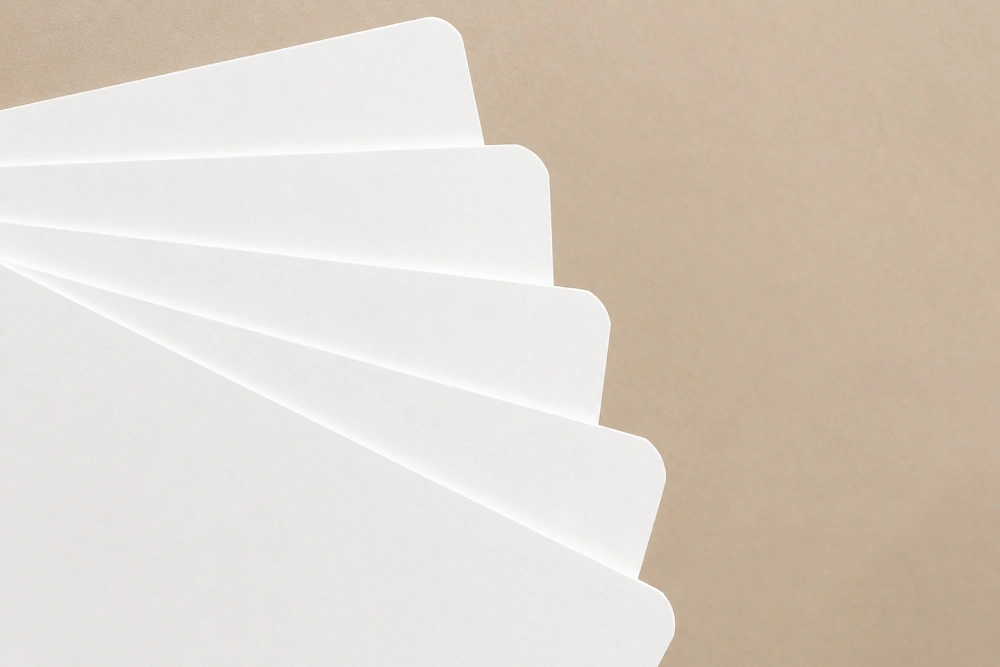
This is a clean, white premium paperboard. It is smooth on both sides; perfect for high-quality color printing. Choose SBS paperboard for bright graphics, shiny foils, and a luxurious feel.
Kraft Paper
Made from recycled material, kraft paper is brown and natural. It gives your candle a rustic, organic look. Kraft is very popular for handmade and vegan candle brands.
Cardboard
Lightweight but sturdy, cardboard is a classic choice. It is very easy to cut and form into many box shapes. That’s why cardboard works well in retail shelves.
Corrugated
Corrugated material has a wavy layer inside called a fluting. This fluting absorbs shocks when the box is dropped. It is the best choice for shipping or candle subscription boxes.
Rigid Chipboard
This is the thick, sturdy material for luxury candle boxes. Rigid chipboard doesn’t bend or collapse; it’s four times thicker than standard paperboard. Choose rigid if you sell high-end candles.
Popular Candle Box Style Options
Your box style changes how customers interact with your product. So, let’s have a look at popular candle box style options to choose from.
Tuck Top Candle Boxes
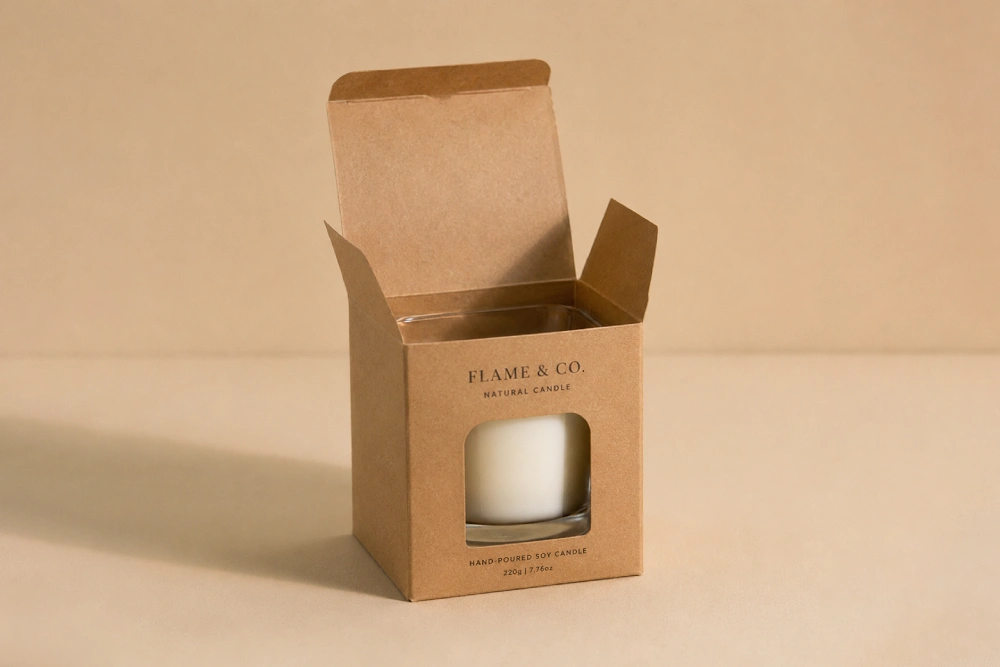
As the name suggests, the top flap tucks into the box to close it. A tuck-top candle box is simple, affordable, and ideal for retail shelves. You can get it in straight-tuck or reverse layout.
Two Piece Candle Boxes
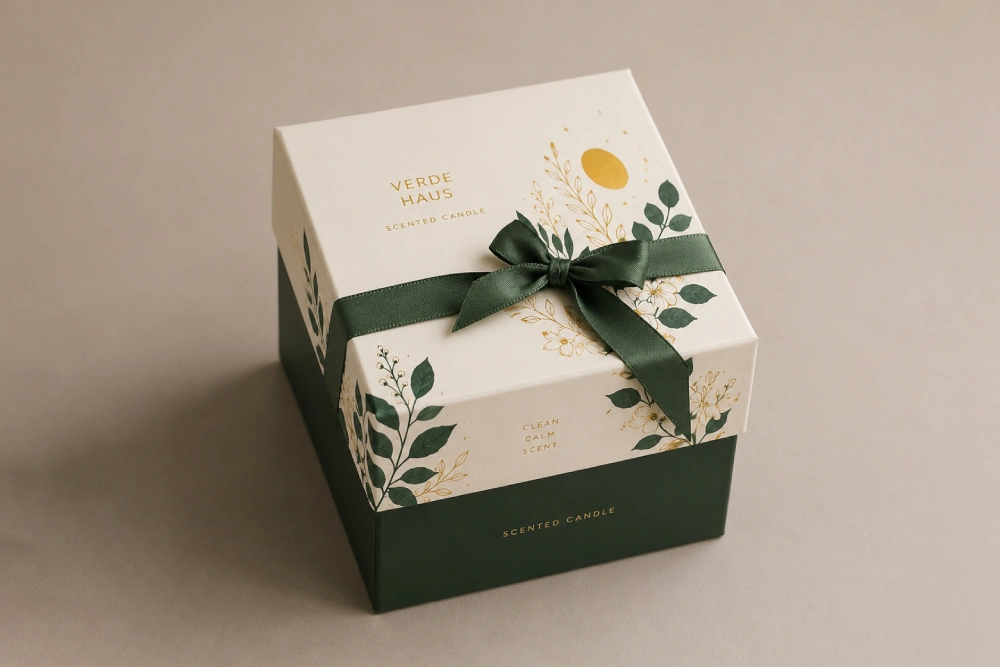
They are premium packaging solutions composed of two components: a separate base and a lid. Two piece candle boxes are popular for both retail brands and artisans. They provide excellent product protection, double as luxury gift packaging, and offer a memorable “unboxing” experience.
Drawer Candle Boxes
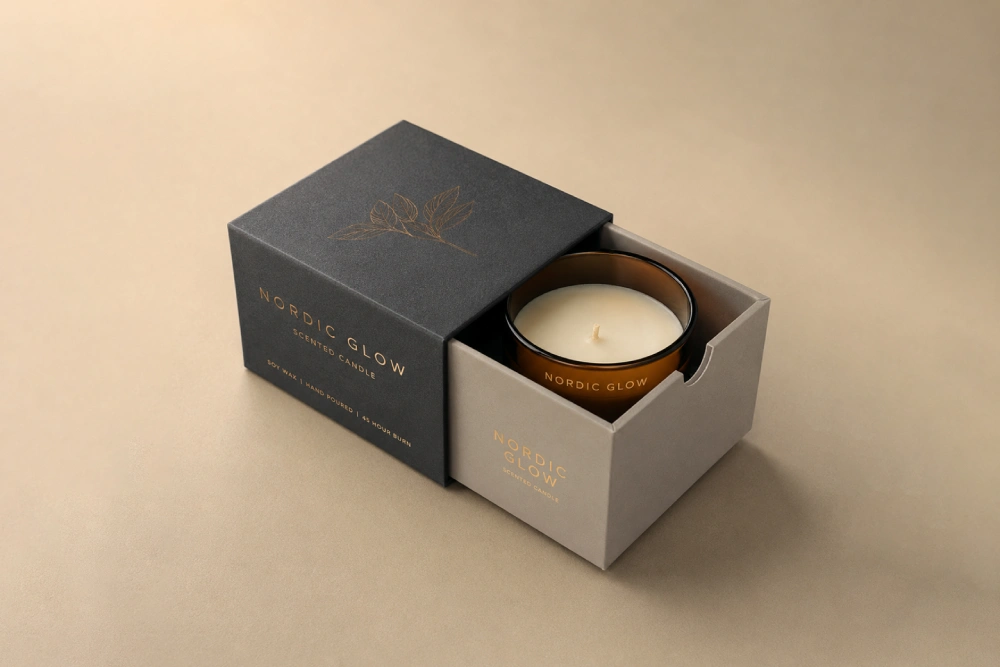
These boxes slide open like a matchbox. Mostly, they come with a ribbon pull tab or a thumb cutout on the side. Modern and high-end, drawer candle boxes give customers a fun, interactive unboxing experience.
Magnetic Closure Candle Boxes
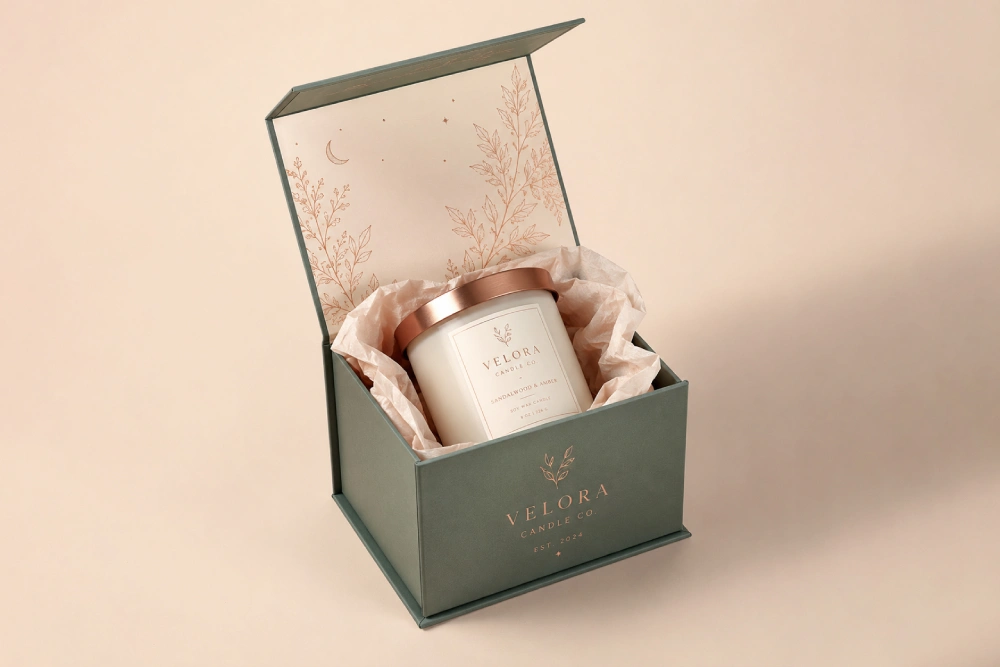
Magnetic closure candle boxes use small magnets hidden in the lid to snap shut. They make a satisfying “click” sound when closed. As they look and feel premium, customers often reuse these boxes to store jewelry or makeup.
Window Candle Boxes
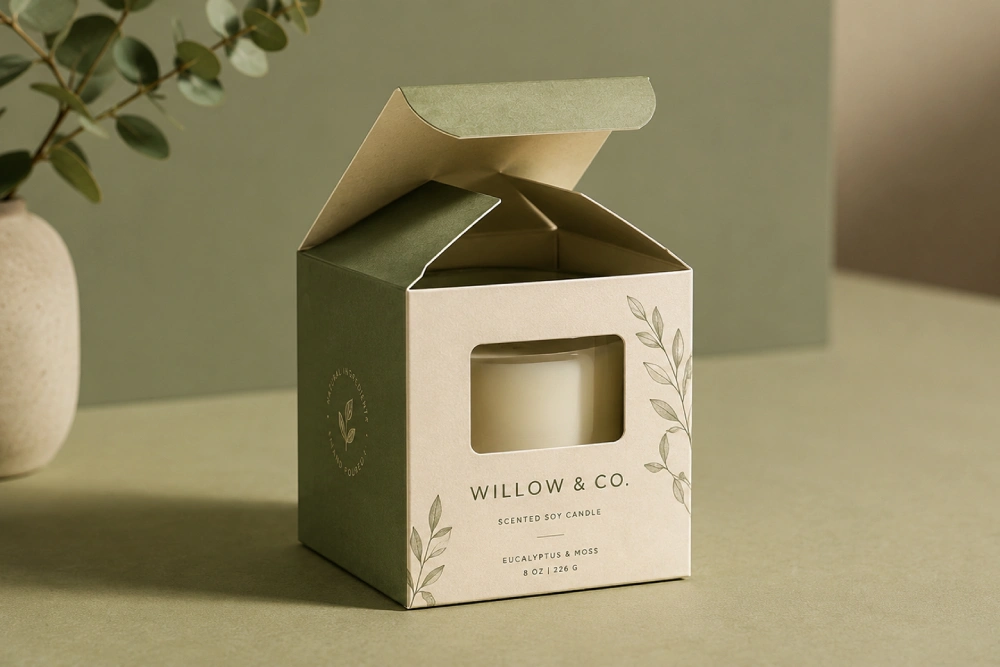
They have a clear cutout on the front, whether open or covered with PVC plastic. Window candle boxes let the buyers see your candle color and design without opening the box. They are ideal for colorful and decorative candles.
Sleeve Candle Boxes
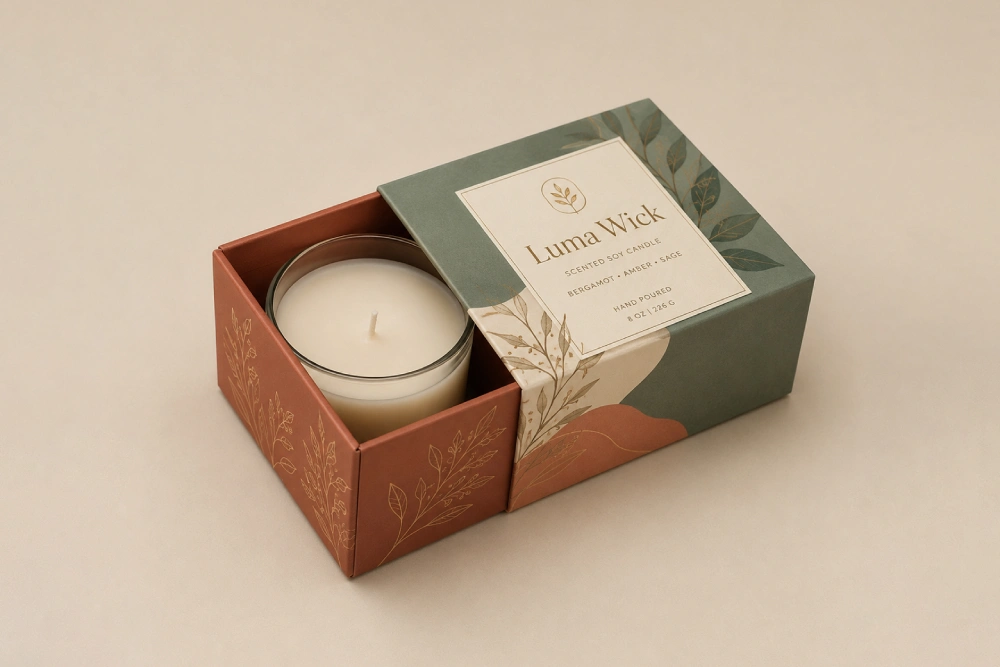
Sleeve candle boxes are a premium two-part packaging system consisting of a sturdy inner tray that holds your candle and an outer wrap, or “sleeve,” that slides over it. Candle makers widely use this design to elevate branding and provide an interactive unboxing experience.
Display Candle Boxes
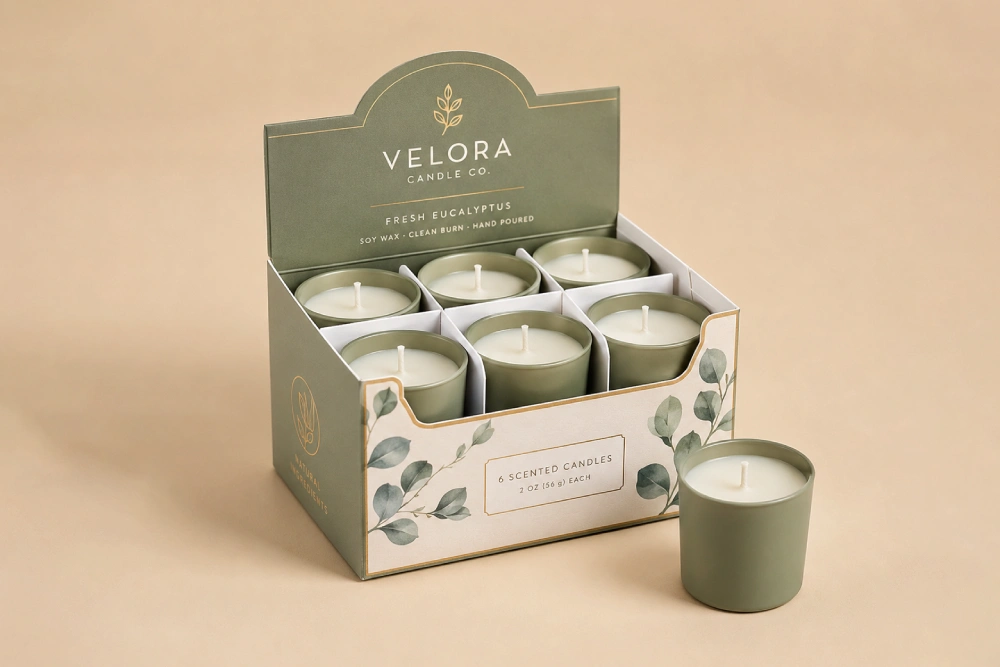
A display box helps you showcase multiple candles at once. Place it on the checkout counter at your boutique or retail shop, and it will drive impulse purchases with no hassle.
Different Candle Types and Their Packaging Needs
Not all candles are the same. Different candle sizes and shapes have their own packaging needs.
Votive Candles
Votive candles are small and short. A votive candle box typically holds a three-piece set or more.
Which packaging suits them?
- Go with a drawer box.
- Showcase multiple votives in a single display box to grab more sales.
- Don’t forget to add internal cardboard dividers to keep them from bumping into each other or scratching.
Tea Lights
Tea lights are tiny and sold in large packs of 10, 20, or 30. They do not need a fancy box.
Which packaging suits them?
- Use a window candle box to let buyers see the whole set.
- Include custom dividers to keep an organized presentation.
Container or Jar Candles
These candles are heavy because of the glass, metal, or ceramic jar. They need thick, sturdy boxes to hold them securely.
Which packaging suits them?
- Opt for luxury candle boxes or two-piece boxes made from rigid chipboard.
- Use corrugated material to produce jar candle boxes for shipping.
- Use custom inserts to hold the jars so they won’t slide around.
Pillar Candles
Pillar candles stand tall without a jar. This means that the wax is fully exposed. Thus, human fingers can leave smudge marks on the wax.
Which packaging suits them?
- Choose durable cardboard or rigid chipboard packaging material.
- Use custom pillar candle boxes with a soft, silky inner coating to stop the wax from getting scratched or dented.
Taper Candles
Taper candles are long and thin. They break easily if they get warm.
Which packaging suits them?
- Long, flat boxes with soft padding.
- Dividers or compartments to keep every candle perfectly straight and safe.
Why Custom Candle Packaging is Important for Your Business?
Investing in custom packaging might seem costly at first. However, it helps your business grow in big ways.
Here’s why custom candle packaging matters.
Product Protection
Broken candles cost you money. Safe, high-quality packaging stops damage before it happens. As a result, it saves you from returns, refunds, and customer disappointment.
Scent Preservation
Candles are about the scent. Yet, if left in the open air, your candles’ fragrance oils evaporate. A high-quality box locks the scent inside. Plus, it stops the fragrance from fading while sitting on the shelf for months.
Perceived Value
People still judge a book by its cover, and candle lovers are no exception. Beautifully designed packaging makes your candle look more impressive and expensive. This means you can charge higher prices and a bigger profit.
Brand Identity
Your candle packaging tells your brand’s story in seconds. It shows whether you are a luxury, organic, or fun brand. It sets you apart from hundreds of other brands in the candle market.
Shelf Appeal
Be it in a boutique or retail store, your candles sit next to many rivals. Eye-catching patterns, shiny lines, or a unique box shape will make people stop, pick up your candle, and buy it.
Social Media Reach
We all love to share pretty things online, and a candle is one of them. If your packaging looks stunning, customers will surely love to share their unboxing videos on Instagram or TikTok. This broad social media reach provides free marketing to attract new potential buyers.
Getting the Right Candle Boxes
There are various effective candle packaging ideas you can find out there. But of course, you need the right candle boxes for your lovely products and brand, right?
Follow the practical steps below.
Choose the Right Material for Your Candle Type
When designing a candle box, you should match the box’s strength to your candle’s weight. Heavy glass or jar candles need corrugated or rigid chipboard. Tea lights or small votives can use paperboard.
Know the Precise Box Dimensions
Use a ruler to measure your candle’s length, width, and height. Add about 0.06-1 inch to each side. This way, your candle slides easily but won’t shake around.
Opt for the Right Box Styles
Choose a box style that matches your budget and brand vibe. Tuck top box saves startups money. Meanwhile, drawer or magnetic-closure boxes add a touch of luxury for established candle brands.
Focus on Shipping Hassles
If you sell candles online, your box must survive the bumps on delivery trucks and the shipping hassles. Make sure you fill the box with bubble wrap or packing peanuts for ultimate safety.
Know Candle Labeling Requirements
Your candle packaging must also comply with government regulations. This means you need proper labeling.
What are candle labeling requirements?
- Candle’s weight
- Fire safety burn warnings
- The ingredients’ list
- Your business info
Go with Eco-Friendly Options
More buyers care about the planet than ever before. Choose recyclable materials like kraft paper and biodegradable coatings instead of plastic laminates. Consider applying soy-based inks instead of chemical ones. By going green with your candle packaging, you can easily attract those eco-conscious shoppers.
In Summary
No doubt, good candle packaging is a must for a successful candle business. It keeps your products safe, builds your brand, and helps you sell more. By choosing the right materials and styles, you can create an unforgettable unboxing experience that keeps people coming back for more.
FAQs
What makes good custom candle packaging?
The factors that make good custom candle packaging include superior protection & durability, clear brand identity, functionality & sustainability, and a memorable unboxing experience.
What are the best materials for candle boxes?
The best materials for candle boxes include Solid Bleached Sulfate (SBS) paperboard, kraft, cardboard, corrugated, and rigid chipboard.
What are the popular candle box style options?
Popular candle box styles include drawer, magnetic-closure, two-piece, window, and sleeve boxes.
Why is custom candle packaging important for businesses?
Custom candle packaging is important for product protection, scent preservation, perceived value, brand identity, shelf appeal, and social media reach.
Get Free Quote
Latest Posts
-
 May 20, 2026
Candle Box Labeling Requirement: A Complete Guide for Candle Makers -
 March 31, 2026
How to Design a Custom Candle Box That Sells? A Step-by-Step Guide And Expert Tips -
 March 26, 2026
What Materials Are Best for Custom Candle Packaging? -
 March 9, 2026
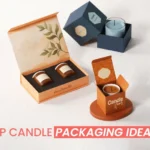
Top Candle Packaging Ideas in 2026: Designs That Sell